

Hi Traders,
On November 5th, 2022 the USATF Trail Marathon National Championship was run on the Moab Trail Marathon course. The winner finished in 3:04. A guy like that runs 26 miles on the road in just over two hours. Same legs, same lungs, 40 percent slower.
The forecast called for rain and I spent the night before worrying about mud. The day ended up being a gorgeous bluebird day. I “ran” that course the same day, and I can assure you…
The course sets the pace, not the runner.
That’s the state of the AI trade right now in a nutshell.
Let me explain…
I didn’t start running until I turned 40. I always hated running, because it’s so uncomfortable. Your heart is thumping, you can barely breathe. Who does this for fun?
So many people love running and I couldn’t understand why. I really wanted to give it a try. That’s when I discovered jogging. Nobody talks about jogging and how amazing it is. How easy on the body it is. How you can just jog, for like… forever.
You know what runners talk about? “Zone 2” running. Endlessly they talk about how great it is. Guess what… Zone 2 is just the running community’s secret code for jogging. It’s all about the pace. It’s “running” at a pace slow enough that you can have a conversation with someone you’re “running” with. Uh…Yeah that’s just jogging.
And jogging is GLORIOUS.
Even better? When we moved out to Colorado I got on the trails. The entire culture around trail running is just glorified jogging in a mountain setting. Does it get any better?
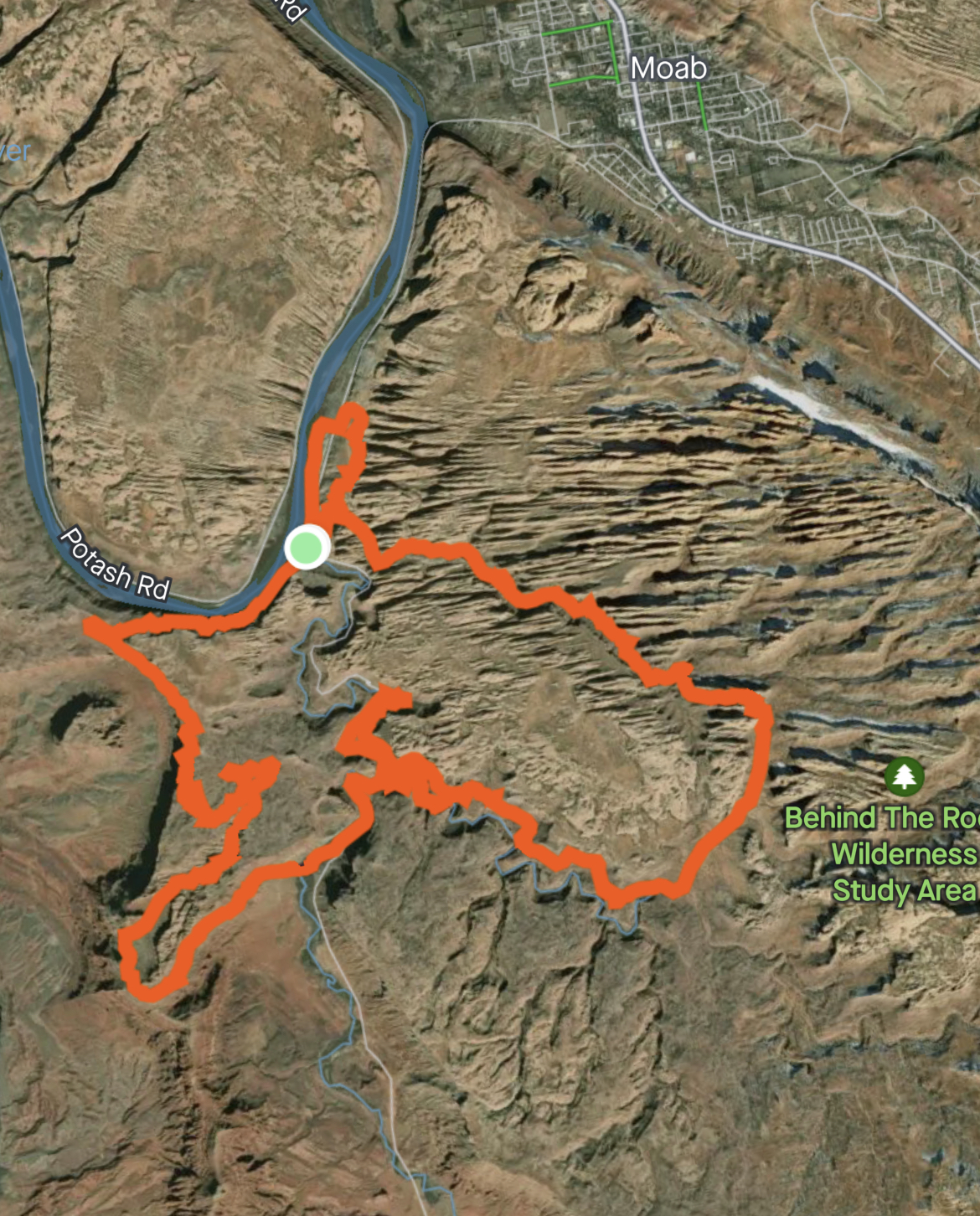
I fell so in love with the trails at this pace. I wanted more. At 43 years old, I decided to sign up for my first Marathon. The Moab Trail Marathon out in the Behind the Rocks area. It’s a 26 mile loop with a few thousand feet of up and down over sandstone, sections where you’re pulling yourself up ropes, and a slot canyon where you have to sign a book. There were camp fires and smore’s at the aid stations. It was epic. If you’ve never been to the Moab area, get it on your bucket list.

This being my first marathon. I read all the training guides. Every marathon tip I read said the same thing. “Don’t go out too fast!”. On race day, everybody gets excited, there’s a huge pack, and you run the first few miles at a pace you can’t hold. What happens next is the wall. You burn through your stored fuel faster than your body can put it back, and when it’s gone you don’t slow down. You blow up. So, they say keep it at your marathon pace. It’s not the same as your sprinting pace.

That wasn’t much of a problem for me. I’m not a runner, Im a jogger. And I wasn’t going there to “race”. But during the build phase, I loosely followed a plan, and tried a few runs at my fastest one mile pace, and at 43, never having sprinted a day in my life, four laps around a track in six minutes and 30 seconds was a rude awakening. Coughing and wheezing. That was the first and last time I ever wanted to see how fast I could run a mile. Sprinting is definitely running, and I hate that.

I finished Moab around the six hour mark. Like I said, fire pits and s’mores. I even just sat for a bit on a cliff side and just enjoyed the scenery. I had a smile on my face the whole way, never once felt like I was going to blow up, and at the finish I remember asking someone if they wanted to go for another lap. That’s the day that got me into the Ultras, which are any runs over 30 miles. I’ll save those stories for another time.
The course sets the pace
Ok back to markets.
The AI build out is the course. And like Moab, the course sets the pace, because you can’t pour concrete, fabricate chips or hook up gigawatts of power any faster than those things get done. Rates, credit, oil and capex are the weather. Everyone with money in this market is a runner on that course, the companies building it and the traders trading it.
Leverage is sprinting. A company can borrow at sprint pace, but its revenue only grows at build pace. A trader can lever up at sprint pace, but the trade only pays at build pace.
The blow up isn’t that people sprinted. There’s nothing wrong with a fast mile. The blow up is that they sprinted and tried to hold it for 26 miles of hilly rough terrain.
Dot-com was similar. The internet got built. The race finished. And the companies and the traders who went too fast, blew up before the finish. The build out was never the question. The pace and the returns were.
What hitting the wall looks like
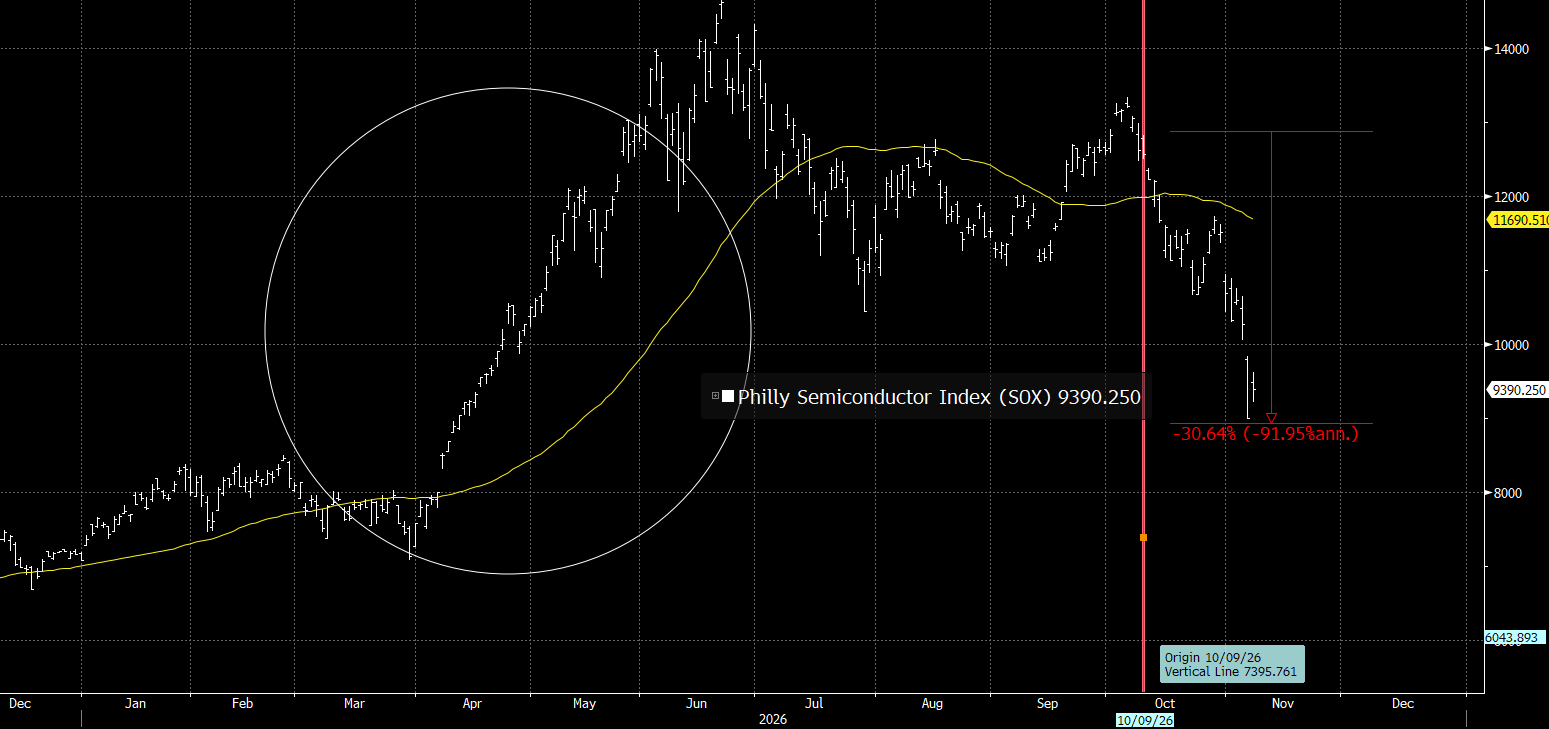
On Thursday the Philadelphia Semiconductor Index (SOX) fell 12.25 percent. There’s been one worse day since 1994, and that was March 16, 2020. The Nasdaq 100 closed below its 200 day moving average for the first time since April.
This is not a growth scare. This is certain runners hitting the wall. Goldman's data shows hedge funds net sold about $20 billion of tech in October, undoing the AI net longs they'd built since 2025. Walleye Capital, a $17 billion fund, had its worst month since March 2020, is cutting its stock picking teams and returning capital. That was the first wave.
Thursday was the second. Retail, who'd put more than a billion into semi ETFs the day before. Triple levered funds forced to sell at the close. Margin accounts in Asia getting called. Nobody wants to sell 12 percent in a day. That's a runner puking his guts out on the side of the trail.
You could see when the sprint started. From March 31 to April 24 the SOX was up 18 days in a row, the longest streak since at least 1994. Then there’s the triple levered semiconductor ETF (SOXL). That’s 100 meter dash pace during a marathon. It went from $28 last November to $302 in June. Thursday it closed at $40. Someone needs to call a medic.
The rest of the field is still running
If this were the race ending, the market would be repricing growth. The wise old man in the room would be up off his La-Z-Boy screaming. That’s the bond market. He isn’t. On Thursday the 2 year yield fell 12 basis points and the 30 year barely budged. Two leading thirties is a flight to immediate safety, not a repricing of growth. If bonds believed the slowdown story they’d be up a lot more.
High yield corporate bonds (HYG) track the credit markets. They were screaming in September. And several funds blew up in that tantrum. But on the second worst semiconductor day in decades. Credit on the whole barely moved. So Credit isn’t immediately raising another alarm.
And look at the pack. The equal weight S&P 500 (RSP) printed an all time high Thursday morning on the open. By my count, of the 113 S&P names that were up 5 percent or more on Wednesday, 80 of them kept more than half of those gains through Thursday’s mess. The bathwater is going out. The baby isn’t ready to go with it.
For the moment, this is a market position event, not a growth event or a credit event.
The election “blue wave” is like a forecast for bad weather and a muddy course. Slower permits, harder power, a longer build. That's a fear of something that hasn't happened yet, and the runners who planned their pace for sprinting are the ones blowing up.
The reason I'm not buying the dip in semis just yet is that the positions are still gargantuan. We're at a point I've never seen where so many people have the exact same trade on.
It used to be that traders from different desks would whisper what they had. The playing field has been leveled. Everyone has access to the same tools, tied into the same data. Between Ai and social media, everyone is looped into all the same great ideas. There might be a lot of sprinters still on the course who haven’t hit the wall yet. Keep in mind, the long term joggers haven’t even opened their statements from October.
You control your pace
Here's the thing I keep coming back to. Everybody can see the course now. The AI build out isn't a secret, it's a multi year project with a public price tag, and between AI tools and social media, everyone is looking at the same map. When the course is that visible, the edge isn't in seeing it. The edge is pace. It's the only thing on the course you actually control.
I understand the power of narratives as much as anyone. It's a huge part of how I trade. But I'm on the fence about how durable this referendum on data centers narrative is. The ink has barely dried on the ballots and the sprinters are already dry heaving. The data center people are still issuing debt and still building. The course is still there. The race is still on.
So what does marathon pace look like for a trader? Three things.
Size so a bad mile is just a bad mile. The semis fell 30% from the October high, 12 percent on Thursday and funds are blowing up. That’s one month. If you can’t survive one month on a multi year thesis, you were sprinting, whether you called it that or not.
Run the stretch of course that's runnable. A 26 mile trail has sections. Some are rope scrambles, some are downhill you can open up on. Right now semiconductors are the rope scramble. In October the other sectors were runnable. In the Foundation service I run, we jog from sector to sector, and three days after the cycle high I told you a turn was starting. Through October's sell off, with SPY down 1.1 percent, QQQ down 6 percent and SMH down 12 percent, we booked 11 of 15 winners. Not because I'm faster. Because I was running the downhill sections.
Stop at the aid station. Fire pits, s'mores, even a beer on the cliff side. Booking a win and sitting flat for a while isn't quitting the race. It's how you still have legs at mile 20.
Two things would change my mind.
High yield corporate credit (HYG). If junk bonds start making new lows while the credit fund stories keep rolling in, that's a pack of runners who needs a medic.
On the capital expenditure side. If the hyperscalers actually start cutting their build plans, that's the course itself changing, and that's a different story altogether.
If any of this were to come true, Long Treasuries are massively underpriced. A long TLT position is the best hedge against this outcome.
Until then, this is sprinters blowing up on a course that's still 20 miles long. Run your marathon pace. The goal is to be the one at the finish asking if anyone wants another lap.
Enjoy the journey,
Tim