

Friday, Freeport-McMoRan broke out to an all-time high. Up nearly 8 percent to close just under $77, on more than double its average volume.
The wires credited copper. Copper didn't make a new high that day. It sat about 2 percent under the record it set on August 12.
Copper is the trigger everybody has wired to Freeport, me included. That's the rule. Copper breaks out, Freeport breaks out. The dog wags the tail.
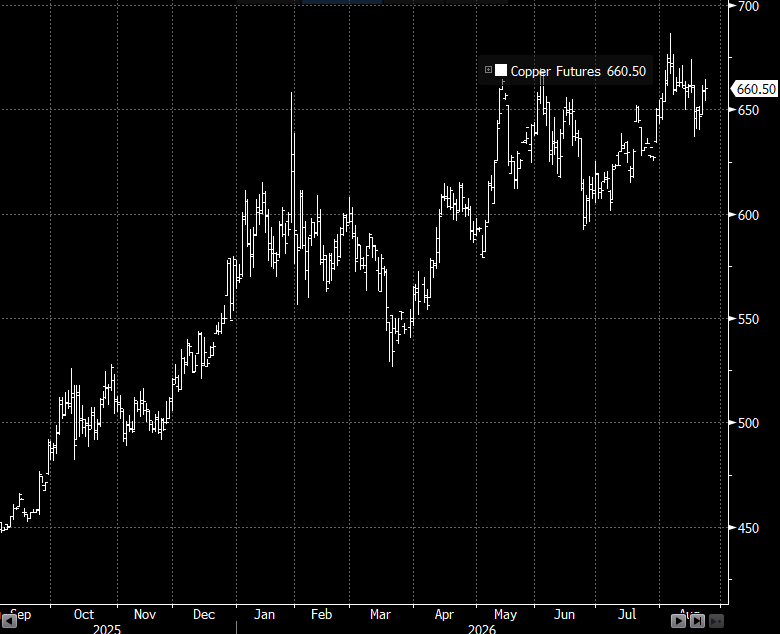
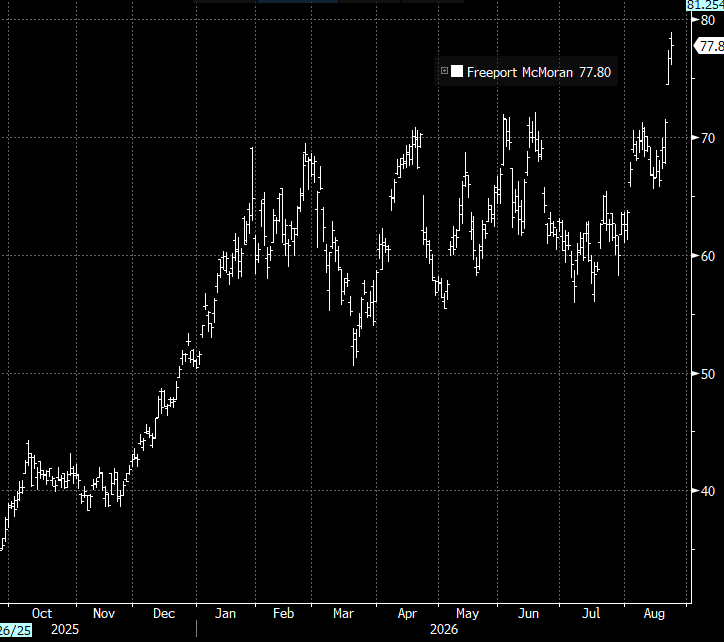
Friday the tail wagged and the dog never moved. When that happens, a different force is doing the work underneath.
Stay with me, because this one runs through a mountain in Colorado, and it connects straight to the service I'm launching Thursday.
The Quarter Nobody Charts
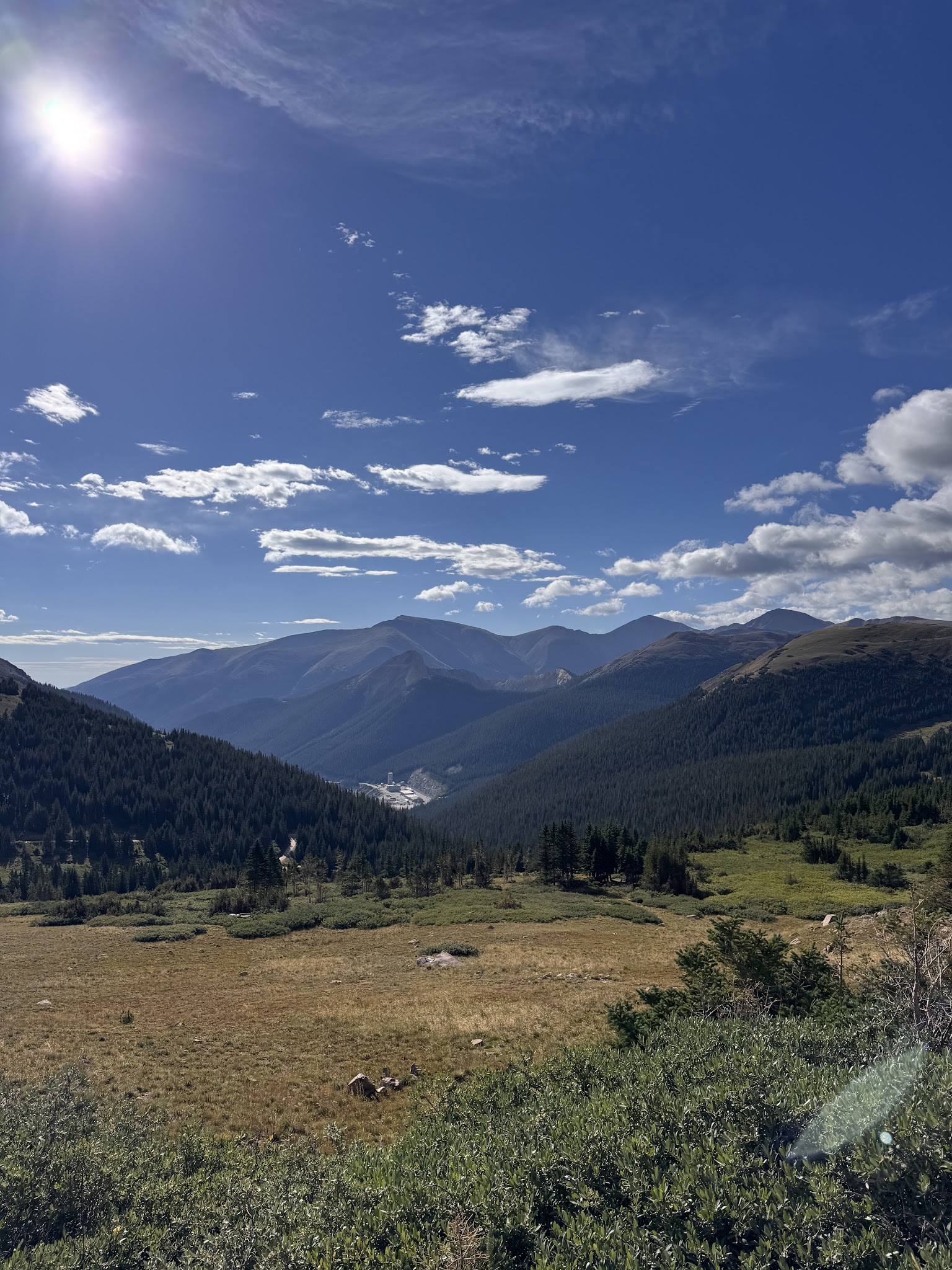
Sunday I did an adventure run up Jones Pass and along the Continental Divide, about an hour west of Denver. The trailhead parking lot sits on the access road of the Henderson mine.
Thousands of people drive past it on I-70 every day and never know it's there. It's a Freeport property, 50 years old this year, and North America's largest primary molybdenum producer.
Molybdenum. Moly, if you don't want to sprain your tongue. Element 42 on the periodic table.
It's the ingredient that makes steel tough. A pinch of it and steel gets stronger, handles more heat, and shrugs off corrosion. Pipelines, jet engines, stainless.
About 80 percent of the world's moly goes into steel, and most of it comes out of the ground as a byproduct of copper mining. Henderson is one of the rare mines on Earth that digs for the stuff on purpose.
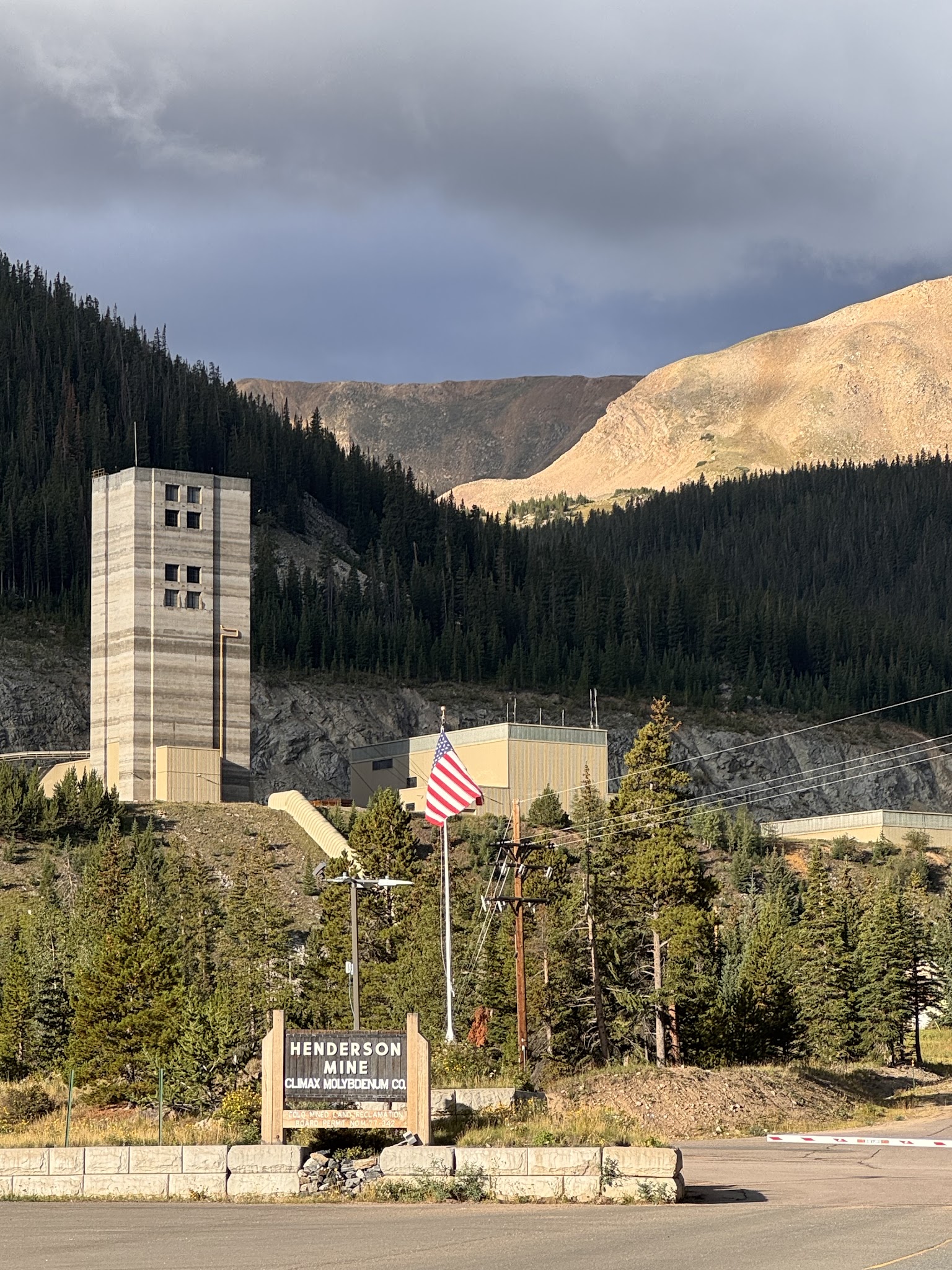
The operation itself is wild. They hollow out the inside of a mountain, let gravity crush the rock, then run the ore through a 10-mile conveyor tunnel underneath the Continental Divide to a mill 15 miles away on the other side.
You recover about four pounds of moly from every ton of rock. You move a mountain to collect a rounding error.
Here's my favorite detail. Clear Creek County takes about 70 percent of its property tax revenue from that mine, and it values the property on a 10-year average, because the moly price swings too hard to assess on anything shorter.
Moly has traded above $45 a pound and it has traded at $5. To a trader, the 200-day moving average is infinity. These folks are marking to a decade. And I thought trading was hard.
What Actually Moved the Stock
So why does a moly mine in Colorado matter to your P&L? Because it's the window into the part of the book nobody charts, and that part is what moved the stock Friday.
Everybody looks at Freeport-McMoRan (FCX) and sees a copper company. Fair. Copper was 75 percent of revenue last year. The other quarter is gold, moly and silver.
Gold ran about 15 percent of revenue, and that slice is growing fast. The giant Grasberg mine in Indonesia is ramping back up, with second-half gold volumes guided more than 65 percent above the first half. The gold slice is expanding at the exact moment the gold price went vertical.
Gold spent most of the summer flat on its back around $4,000 an ounce. Friday it punched through $4,600, up about 5 percent on the week, its fifth straight weekly gain and the longest streak since October 2025. The miners had already put in their hottest five-day run since 2008.
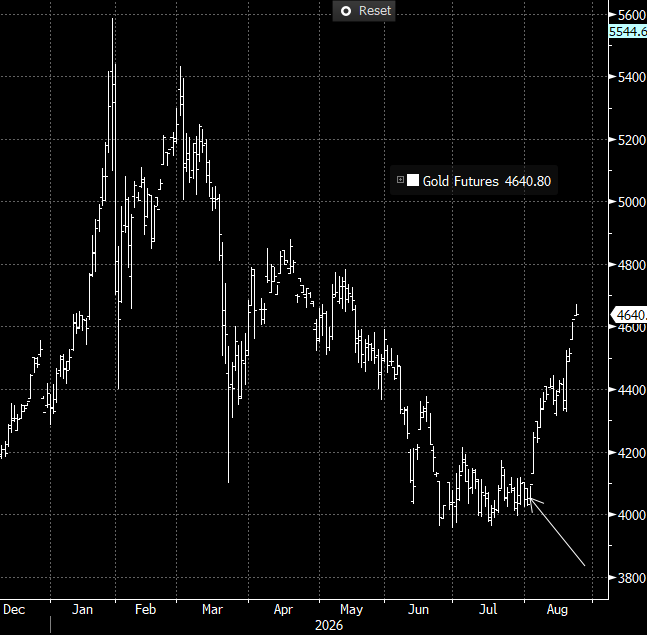
The obvious names repriced first. Newmont (NEM), the juniors, the whole gold complex. That's where my attention was, because that's where my position was.
I caught the gold breakout and put it out in Special Situations. I also noticed copper wasn't participating.
Now run the math on Freeport. The company's own sensitivity figures put roughly $110 million of annual EBITDA (earnings before the accountants get to it, about the closest thing to raw cash the business throws off) on every $100 move in gold at 2027 and 2028 volumes. Gold moved $600.
On a stock everyone grades off the copper chart, the gold book quietly added over half a billion dollars of run-rate earnings power in about a month. Friday, the market caught up to it all at once.
Now the confession. Standing up on that mountain Sunday looking down at a Freeport mine, I thought I'd missed the move. My copper trigger never fired, it was a busy week, and I was quietly kicking myself at 12,000 feet.
Then I got off the mountain and pulled up the Macro Barometer. All I could say was the thing my grandfather used to say: "Well, I'll be damned."
Two days ahead of the breakout, on Wednesday the 19th, enough pressure had built in the Materials signals that the Barometer flipped long on the sector ETF, XLB. Freeport is the third-largest holding in that fund, about 5.5 percent of it. Add Newmont and the two miners run roughly 12 percent of the whole thing.
I'd been long the force the whole time. It was a decent winner, and it came through the exact channel the system was built to catch it through.
Rules for Forces
That's the reason I built this thing.
I can't watch everything. Neither can you. Nobody can.
I don't have a rulebook for Freeport, and I'm not going to write one. I'm not maintaining rules for 5,000 individual tickers.
I have rules for the forces behind the market instead. The sectors. Rates, metals, energy, volatility, the dollar. A few dozen measurable inputs, weighed together.
When several of them start voting the same direction underneath the same sector, you get a tailwind you can measure and size.
That's what stacked up under XLB and Freeport last week, while my eyes were on other charts. Freeport just happened to be the loudest stock standing in front of it.
The Barometer is the foundation of the service I'm launching Thursday. You'll see the dashboard. You'll watch the inputs vote. You'll learn to read the market the way a macro trader reads it, as one connected machine instead of 5,000 separate stories.
I built it to hand you something you can act on.
Tap here to save your seat before Thursday.
See you Thursday.
Enjoy the process,
Tim