

Hi Traders.
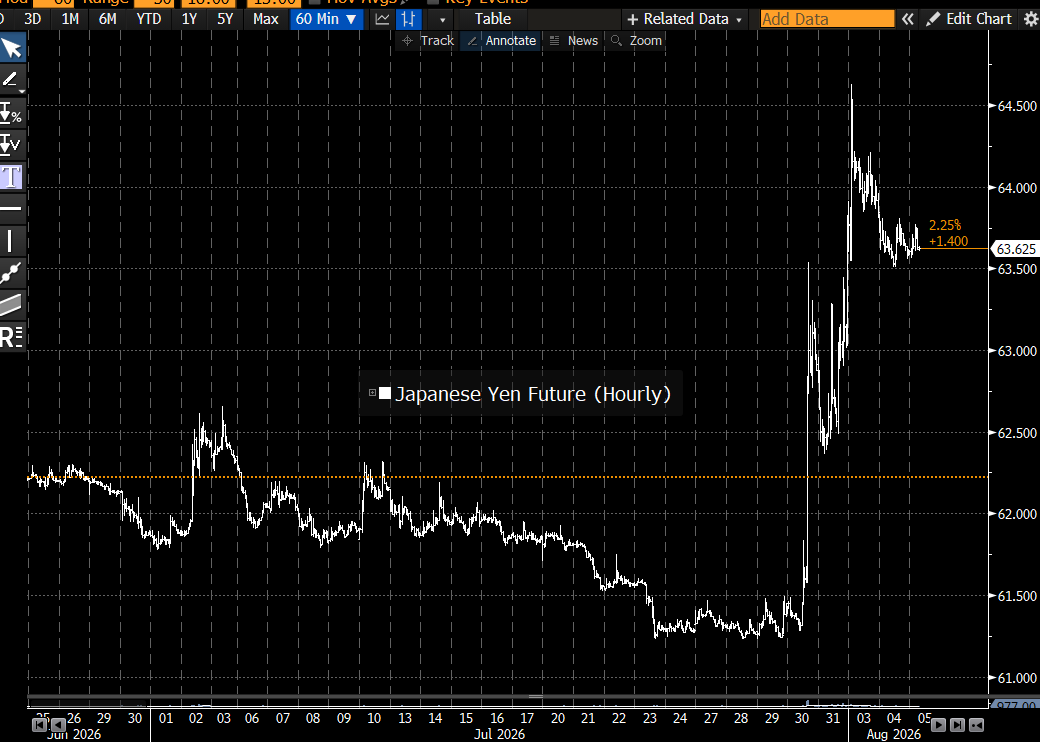
Last Thursday, July 30, the yen went straight up. It moved 3.3 percent in a session, which is 12 days of normal range packed into a single hourly bar.
Godzilla walked into the currency market and lifted it with one arm.
The VIX slept through it, sitting at 18. The 30-year bond sat near 5.24 percent, its highest since 2007, and never flinched.
In part one I showed you why those three normally travel together.
Last Thursday and Friday, only one of them moved.
My risk alarm went off. There was no smoke anywhere.
Two governments were quietly defusing a bomb the market hadn't priced. Here's what it was…
The Bomb Nobody Outside the Bond Desk Was Watching
Japan needs a stronger yen to survive its energy bill. A cheap yen makes every imported barrel more expensive, and the Gulf war already jammed supply.
To buy yen, Japan needs dollars. A country normally raises those dollars by selling U.S. Treasuries, and Japan owns more of ours than anybody on earth: about $1.14 trillion worth.
Now look at where our bond market sits:
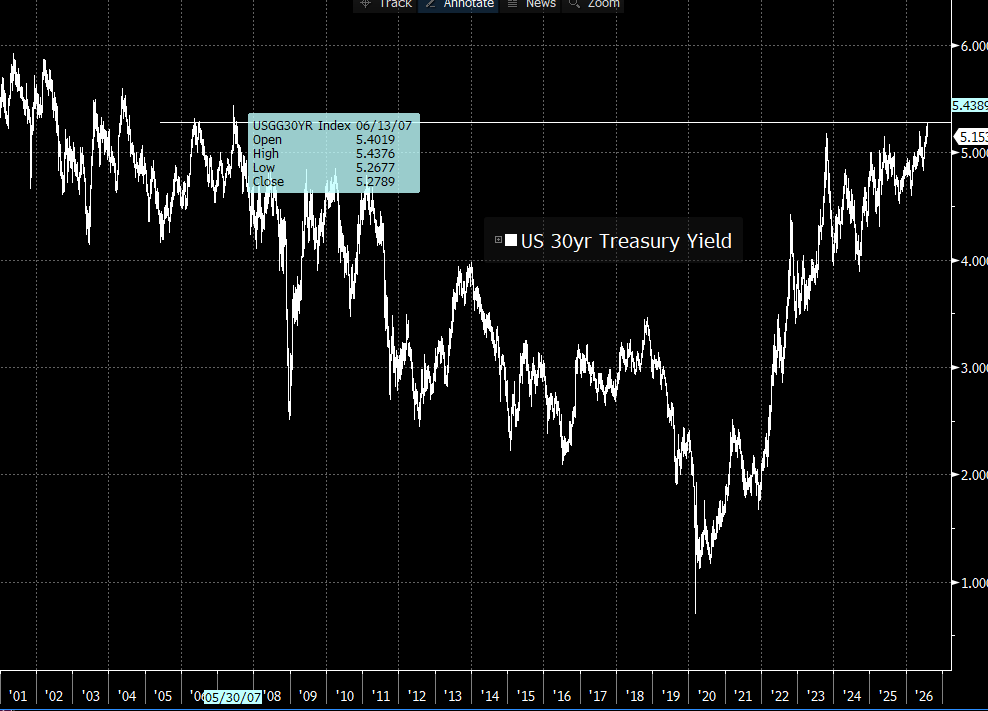
The 30-year just printed its highest yield since 2007, and it got there on our own inflation and our own oil, not on anything Japan did. The Fed held on July 29 with three officials dissenting in favor of a hike.
So the fix for Japan's problem creates ours. A forced seller dumping billions of Treasuries into the weakest bond market in almost 20 years, with every desk on the planet front-running the next sale.
Our yields climb, the gap between our rates and theirs gets wider, and that gap is the entire engine of the carry trade (borrow cheap in yen, park the cash in something that pays more somewhere else).
The yen falls again, and now our mortgages cost more too.
The Exit Bessent Pointed Them At
Treasury Secretary Scott Bessent made his money trading currency events like this one. He wasn't going to let Japan sell our bonds to save its own.
So he pointed Tokyo at a Fed program almost nobody has touched: the FIMA repo facility. It lets a foreign government borrow dollars against its Treasuries instead of selling them, capped at $60 billion a day. The bonds stay parked at the New York Fed and never hit the open market, so the price never moves.
The Fed built FIMA in March 2020 and it's collected dust ever since. Its record draw is $60 billion in March 2023, the week Silicon Valley Bank blew up. Japan's finance ministry said Monday it plans to use it.
Then the second move: On Friday the New York Fed sold euros to buy yen on Treasury's behalf, and Bessent said publicly he'll do it again. When the executing desk gets told not to fade the U.S. Treasury, it listens.
Look at what those two choices protect. Not the dollar, and not really the yen: our bond market.
This was a bond market rescue dressed up as a currency rescue, and traders read it in about a day.
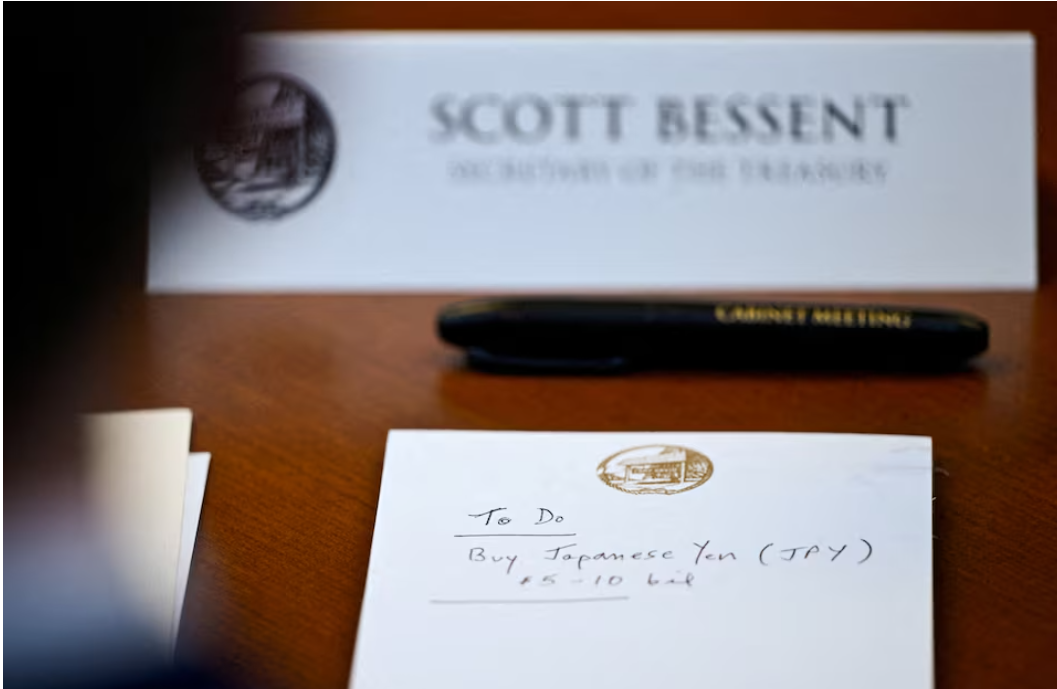
The scale, for context: Japan spent roughly $52.8 billion on Thursday, likely its largest single-day intervention on record. We spent 5 to 10. We co-signed the loan. We didn't buy the house.
Three Weights Came Off, and Two of Them Were Decisions
Oil came down when the President called off the strikes on Iran. Brent broke 90 and WTI slid into the mid 70s. Less oil pressure means less inflation pressure, which means less pressure on yields.
Chips came back. The SOX (the index of the 30 biggest chipmakers) fell 21 percent in July, its worst month since October 2008, then ripped 8.3 percent in two days to close it out.
And the yen got rescued without anybody selling a single one of our bonds.
Notice oil shows up in two of those three. That's why my three charts have been out of step all year, and that's part three.
Only the chip bounce is the market working on its own. The other two are choices somebody made in a room, and people who make choices can unmake them.
Here's what changed for the yen itself: nothing. The Fed still pays 3.50 to 3.75 percent. Japan still pays 1.00 percent, a 31-year high that isn't close to closing the gap.
Japan still can't lift rates without wrecking its own budget, and our 30-year is still above 5 percent. They bought time. They didn't fix the math.
The whole thing also rests on the Iran talks holding, and those talks have collapsed repeatedly. If they break again, oil goes back up and all three weights land at once.
Watch Invesco CurrencyShares Japanese Yen Trust (FXY) and the VIX. If the yen slides back toward where it started, expect another intervention, and I'll send an alert if I see it building.
One more thing: Two governments ran their first joint yen-buying operation since 1998, dusted off a facility built for a crisis, and moved the currency about 4 percent.
Bessent is already pushing Fed Chair Kevin Warsh to make that facility bigger, which tells you he thinks there's more under the surface than we can see.
Enjoy the process,
Tim