
Did the QQQ top out on Tuesday?
The Invesco QQQ Trust (QQQ) popped over 760 on Tuesday and has slipped back to about 750 since. That’s just a touch. But some parts of the market have started to move in a way that tells me money’s looking for other places to park.
The big move came Thursday, when the Financial Times reported that OpenAI’s annualized revenue sat near $50 billion at the end of September. That’s about $20 billion short of the number Wall Street had been passing around.
The predictable names dumped on the news. CoreWeave (CRWV) fell nearly 8 percent, Oracle (ORCL) almost 6 percent and NVIDIA (NVDA) about 3 percent. Microsoft (MSFT), Advanced Micro Devices (AMD), Micron Technology (MU) and the data center names went with them. Basically, the AI buildout crowd and OpenAI’s biggest partners and owners all sank.
But the money did NOT leave the market the way you might have thought. It flowed into two places, and really, the first flow led to the rally in the second.
First, we got a powerful buy in bonds. The 10-year Treasury yield traded above 5.35 percent Thursday morning, right after Fed Governor Christopher Waller said the Fed needs more hikes. By the close, it had dropped to 5.23 percent, with a solid 30-year bond auction helping it along.
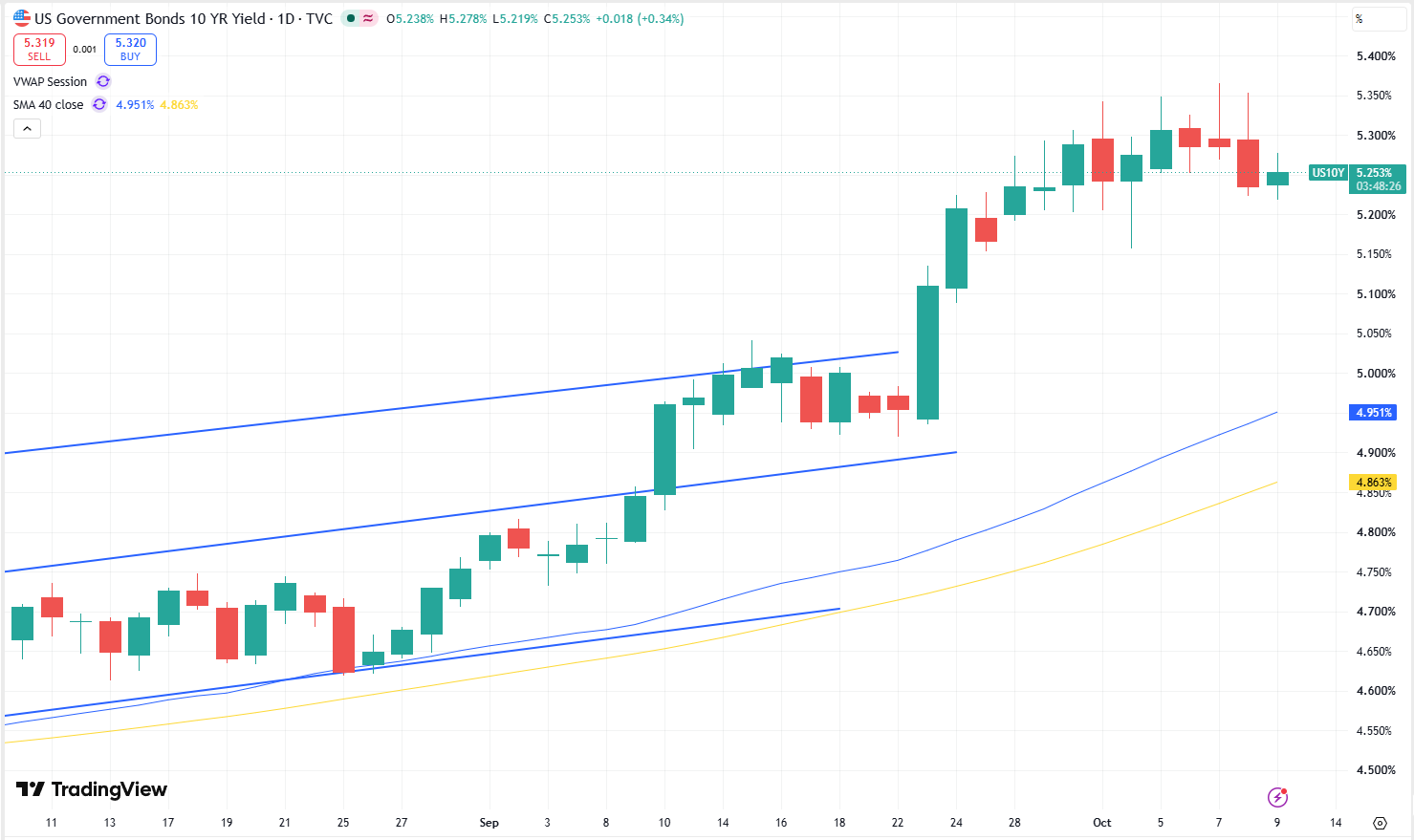
We’ve seen some hard bond selloffs lately. On Wednesday, the 10-year and 30-year yields hit their highest levels since 2002. What we haven’t seen is much heavy buying in Treasurys, and a Fed governor talking hikes didn’t stop it on Thursday.
That money also flowed into rate-sensitive stocks. So while the QQQ sat near its lows of the day, the Dow Jones Industrial Average (DJIA) climbed out of a 185-point hole to finish green. The Invesco S&P 500 Equal Weight ETF (RSP), which gives all 500 stocks the same weight so the AI giants can’t drown everybody else out, rallied 0.6 percent while the QQQ lost 1.3 percent.
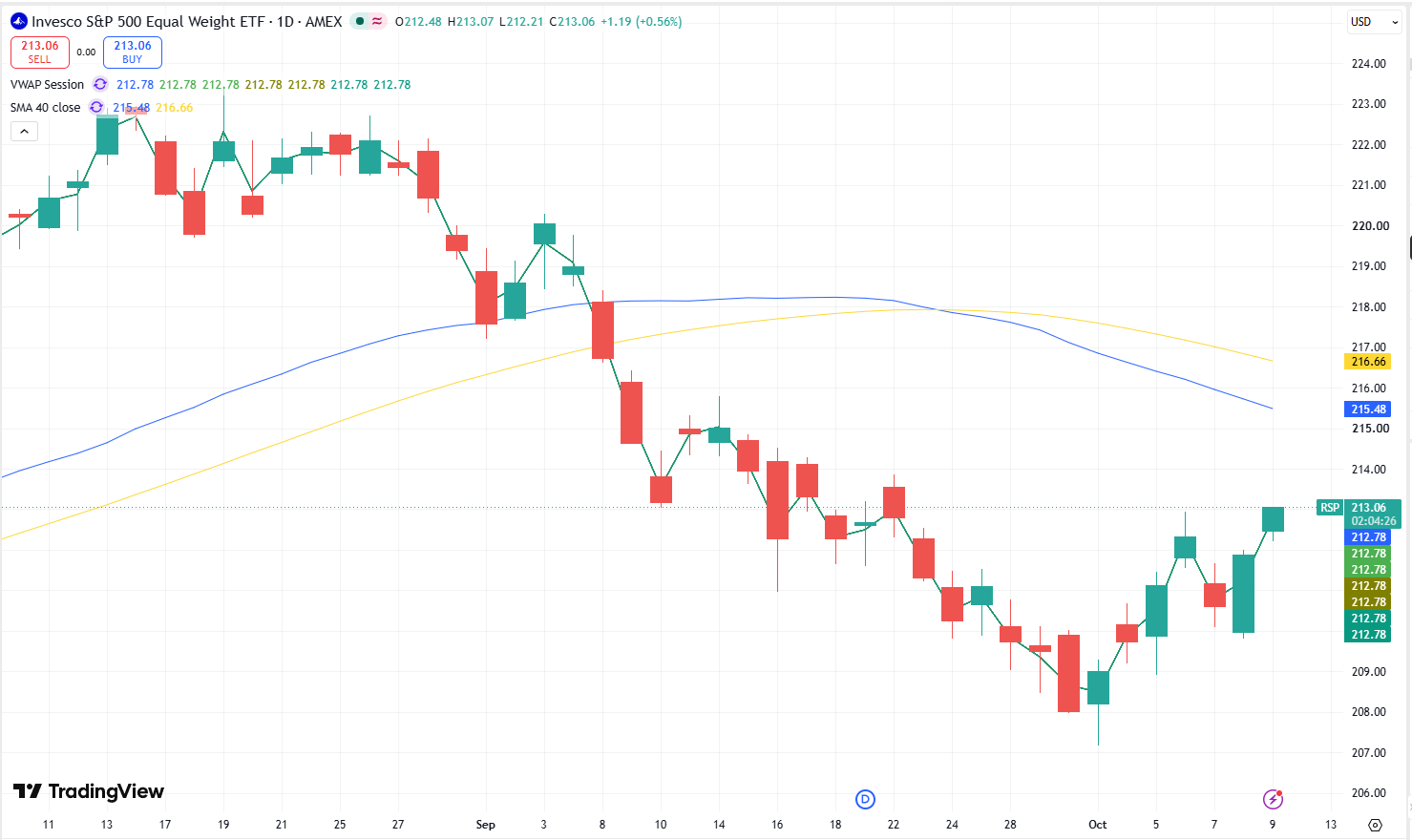
This could be a sea change. Yes, the AI trade will be back. But some traders, hedge funds and money managers might look at how badly the rest of the S&P 500 has done outside of AI and say to themselves, “Maybe it’s time to buy some of these.” That goes double if rates have put in a near-term top, because those stocks absolutely benefit from lower rates.
Somebody Finally Showed Up to Buy
I said it last week and I’ll say it again: I think there’s upside in the iShares 20+ Year Treasury Bond ETF (TLT) and the iShares 7-10 Year Treasury Bond ETF (IEF).
IEF is normally pretty darn sleepy. But the selloff took it from above $91 in late September to lows in the $88 range on Wednesday, and it’s sitting around $89.40 now.
The 90 calls a couple of weeks out are really inexpensive from a dollar perspective, and implied volatility (the part of an option’s price that reflects how big a move traders expect) has started to come off. IEF needs to climb less than a dollar to reach that strike. Roughly speaking, that takes a 10-basis-point drop in the 10-year yield (a basis point is 0.01 percent), and we got 12 in a few hours on Thursday.
I think a 90 call might make some sense. Just remember, IEF has to clear 90 plus whatever you paid for the call to make money at expiration.
It Bounced Like Thursday Never Happened
Microsoft is in bed with OpenAI. It owns about 27 percent of the company. Back in January, Microsoft disclosed that roughly 45 percent of its $625 billion commercial backlog, meaning contracts signed but not yet booked as revenue, came from OpenAI.
And yes, the bulk of Thursday’s OpenAI story was misleading. The $68 billion figure everyone used included gross revenue from OpenAI’s partners, and OpenAI’s own run rate still grew more than 70 percent since July. But the fear around OpenAI and the entire tech spend came through loud and clear in the dump the Nasdaq-100 took Thursday.
Microsoft shrugged it off Friday, bouncing 2.4 percent to $535.07. That puts it up about 45 percent from its late-March close near $370, with earnings coming later this month. I like MSFT back below $500 a share in short order.
Will either one of these two become the trade of the week on Monday? The trades the rest of traders come up with are hard to compete with. If you want to see what happens, tap this link before 10:30 AM Monday and join the Ticker Highlight Show.
Your only option,