

Hey Traders,
The bond selloff is chewing through everything except the biggest names in the index.
Junk bonds, consumer staples and real estate can't catch a bid (nobody's stepping in to buy).
The S&P 500 just sits there, because a handful of megacaps hold it up while sellers pick apart everything underneath.
For a month I've been saying rates are driving the bus. This week the damage showed up somewhere new. It jumped from bonds into credit (the debt companies issue), and that's what I talked about on State of the Market Friday.
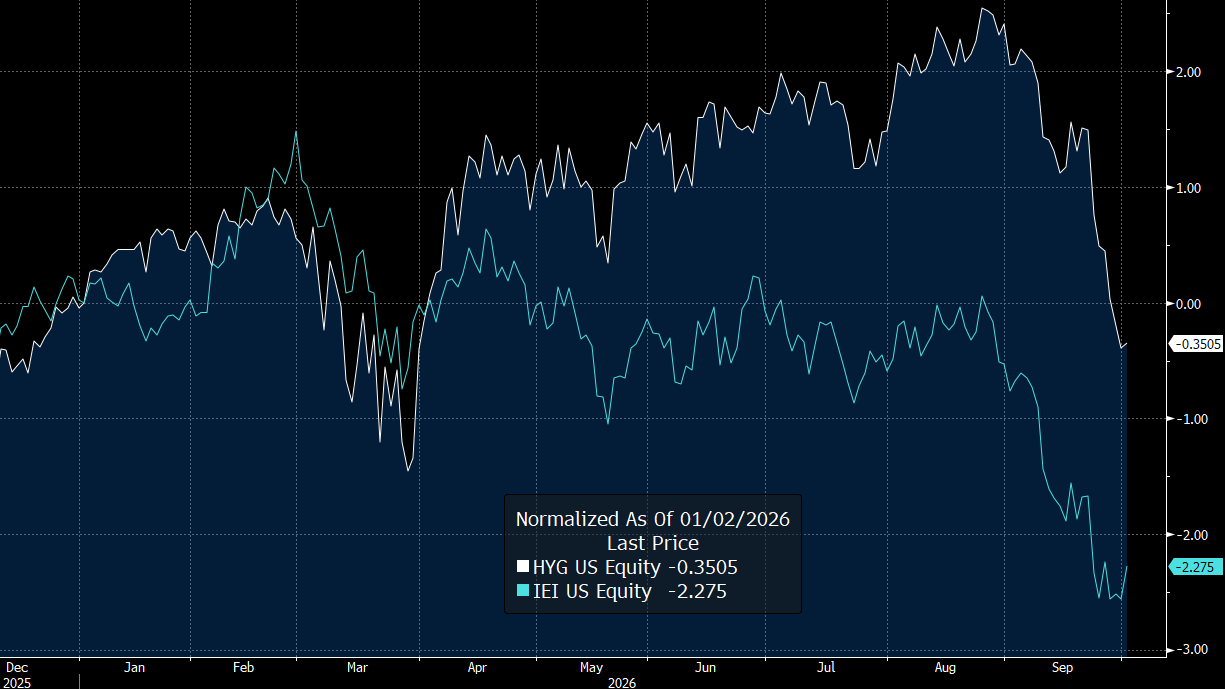
Start with the iShares iBoxx High Yield Corporate Bond ETF (HYG) next to the iShares 3-7 Year Treasury Bond ETF (IEI), which holds government debt with about the same maturity.
Through March they moved together. From April through August, Treasuries went nowhere and HYG kept climbing like nothing was wrong.
Since the August high, HYG's given back almost three points, more than the Treasuries lost. Both funds hold bonds that come due around the same time, so the only real difference is who's borrowing. That tells me the market's moved past pricing rates and started worrying about who gets paid back.
It's worse at the bottom of the credit ladder. Triple C bonds, the junkiest of junk, now trade at distressed levels (priced like default's a real possibility) for the first time since the 2023 banking crisis, according to Bloomberg. The extra yield they pay over Treasuries is up about four percentage points this year.
I'll admit I didn't catch it at first. Nobody looks at triple C. I was watching investment grade because that's what trades.
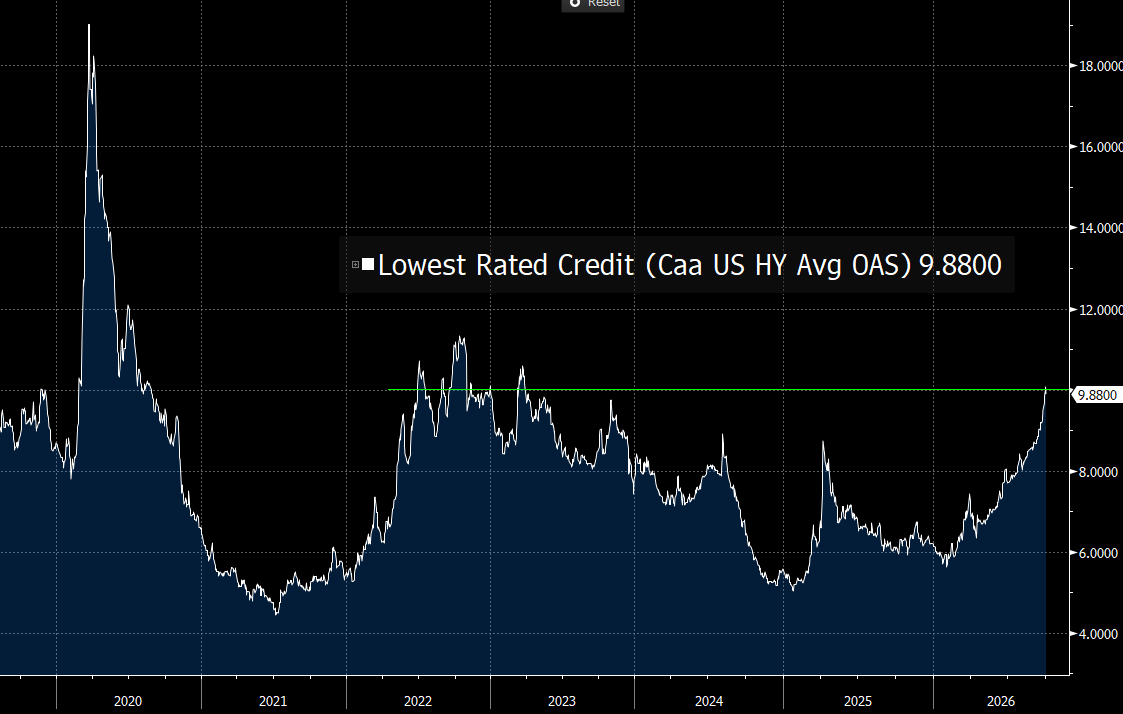
The speed bothers me more than the level. Almost half of this year's move came in the last month, and when prices move that fast, people running borrowed money don't have time to adjust.
So they sell what they can, and what they can sell is the better-quality stuff. That's how a problem in the basement spreads to the rest of the building.
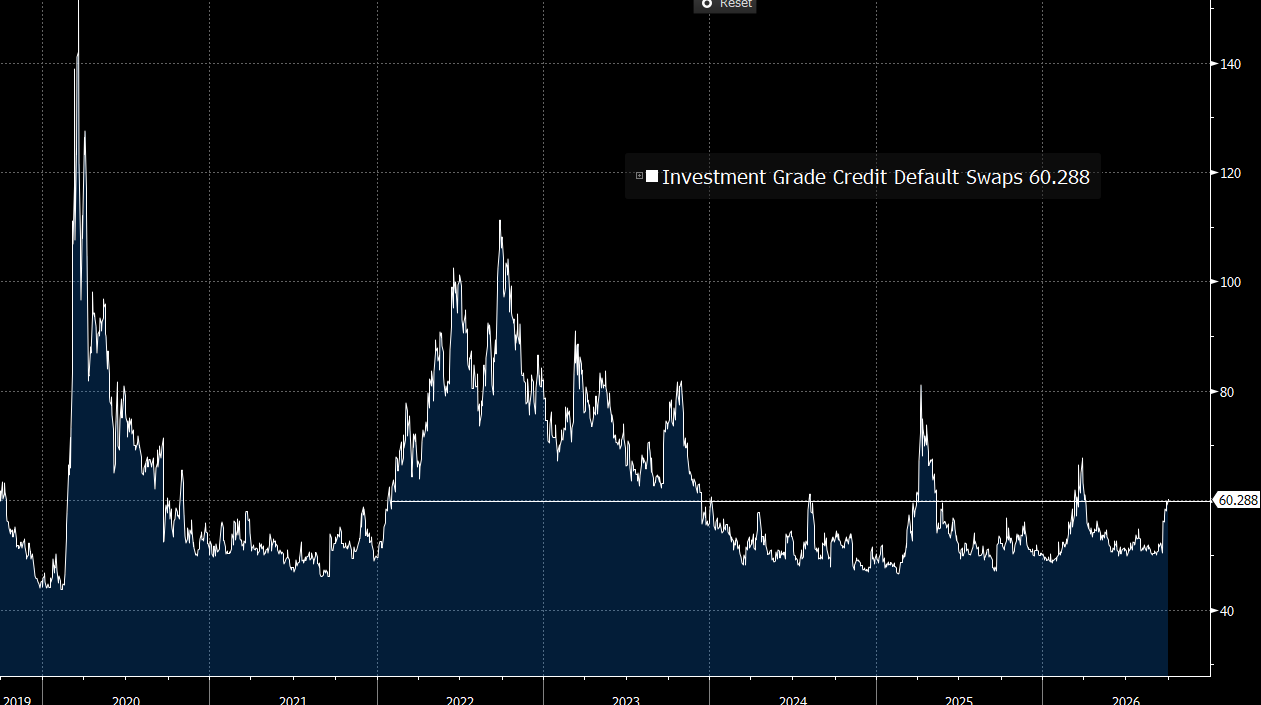
The upper floors still look calm. Investment grade credit default swaps (CDX IG, what it costs to insure high-quality corporate debt) sit at 60, below the 68 they hit in March. Back in March everything jumped at once, and so far this fire's staying downstairs.
You can see it in the stocks of the firms that lend to that basement, too. The private credit names (lenders that fund companies directly instead of through the bond market), Blue Owl (OWL) and Blackstone (BX), rallied hard off their spring lows and have given most of it back.
Why should stock traders care? Smaller companies do a lot of their borrowing down there. Put the iShares Russell 2000 ETF (IWM) next to HYG and you've got the same chart.
They topped in August, broke after September 22 and bounced off Thursday's low on the same days. Small caps trade like junk bonds because the companies in them borrow like junk borrowers.
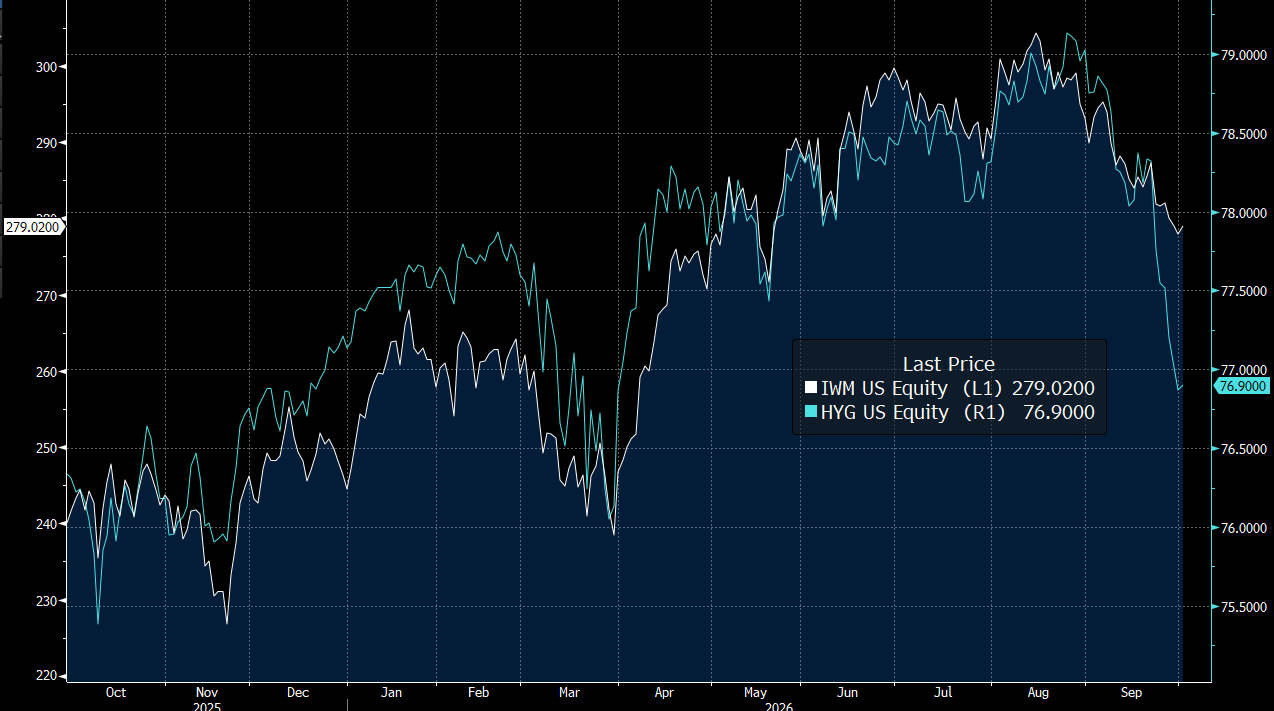
I keep coming back to this: IWM can't rally without HYG. And if small caps can't rally, how much more money can we really pile into the same handful of megacaps holding up the index?
The S&P's been hunting for a reason to move. Thursday it ripped 25 points on a speech from Fed Vice Chair Philip Jefferson, then gave it all back on one Trump post about Iran.
Friday it found one. Payrolls came in at 29,000 against about 90,000 expected, and the government revised July to a loss. The odds of an October hike fell from about 64 percent last week to 18.
The G7 also agreed to release up to 100 million barrels of oil and diesel, and crude dropped to its September lows. Stocks ripped and bonds bounced, because bad news means the Fed might stop hiking.
But the five-year Treasury gave its rally right back. Bond traders went back to worrying about inflation, and that's what the Fed actually watches.
My positions are as small as they've been in months. That's what this much uncertainty does to me.
For the bears, equity volatility looks too cheap. The VIX (Wall Street's fear gauge) has been coiling in a narrowing wedge since June, and it poked the top of that wedge Thursday before payrolls knocked it back Friday. If it breaks out, the index finally does what the average stock's been doing.
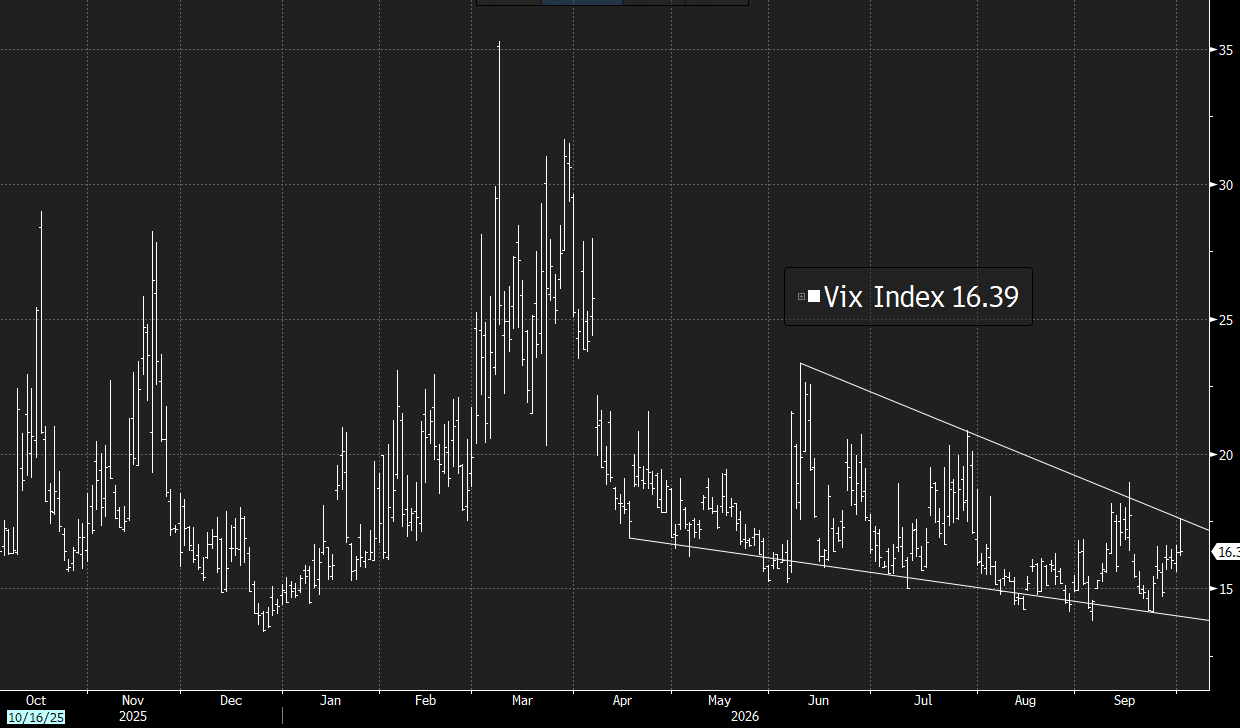
For the bulls, the bond selloff's due for a pause. If Treasuries bounce, the stuff that trades like a bond gets relief first: staples, real estate and utilities, the things people own for the steady payout.
Don't mistake this for a rate scare that blows over. Rates are repricing. Central banks are tightening, just not nearly fast enough, and the bond bleed stops one of four ways: something breaks, growth slows, companies borrow less (they won't) or the government borrows less (ha).
The real problem is how fast yields keep climbing. The market wants a signal that the pace is slowing, and Friday's weaker jobs report gives it one data point.
Enjoy the journey,
Tim