

Hi Traders,
Election night 2016, a little before midnight, S&P futures hit limit down.
Down five percent to 2,028, and the exchange wouldn't let them fall any further. That rarely happens.
By the close the next day they were green by 1.5 percent. Five weeks later they were up nine percent.
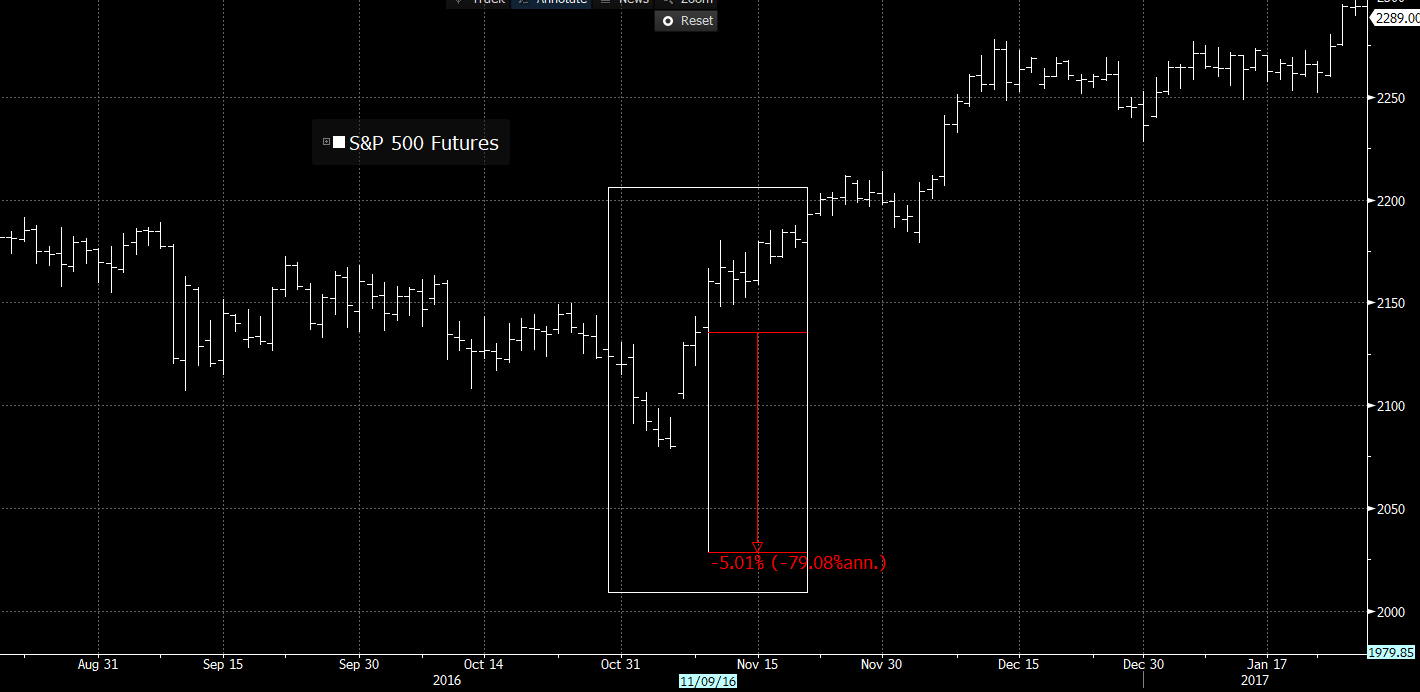
The violence of that move came straight from the market consensus being double wrong in that election. The narrative going in was "There is no way Trump will get elected" and "If he does, the stock market is going to crash."
Every single bank and research group had that.
The S&P had slid nine sessions in a row into that week, then ripped more than 2 percent the day before the vote once the polls settled on Clinton. I remember my scenario sheet from that night, and sitting at my desk at midnight stunned, because S&P futures almost never go down limit.
Not only did Trump win. He retained the House and Senate. It was a pro-business outcome no one had. That market crash? It turned into the largest and most stable 14-month rally since 1995. Thirty-five percent, with only two three-percent dips.
I don't follow politics.
It's not something I'm proud of or ashamed of, it's just not my favorite.
I love this country. I trust the process, and I'm grateful for all the people who do have a passion for it. The whole quagmire of Washington goes right over my head. I loved Wag the Dog from the 1990s and the TV series House of Cards with Kevin Spacey, and that's about as deep into it as I get.
But when it comes to markets, politics does come into play. It moves markets, and next Tuesday is a big one.
An event like this has a million moving parts in an area where I have no interest or edge.
I've watched enough smart people make confident predictions and get them wrong that I find it a little amusing at this point.
So the way I approach it might be different than you'd think.
The Consensus
Right now that part is easy. Prediction markets have Democrats around 90 percent to take the House and about 65 percent to take the Senate. Everybody knows it. What nobody knows is the actual result, and more important, how the market is reacts to it.
Brazil just gave us a live example last week. Going into Sunday's runoff election, the conservative challenger was supposed to win and bring in pro-business reforms, and Brazilian stocks rallied hard into the vote on that story.
He lost.
The next morning the index fell 25 percent at the open, closed down 14, and the exchange halted trading for the first time since 2020. The market got the winner wrong, and the move the other way was so violent, because everybody had the same trade on.
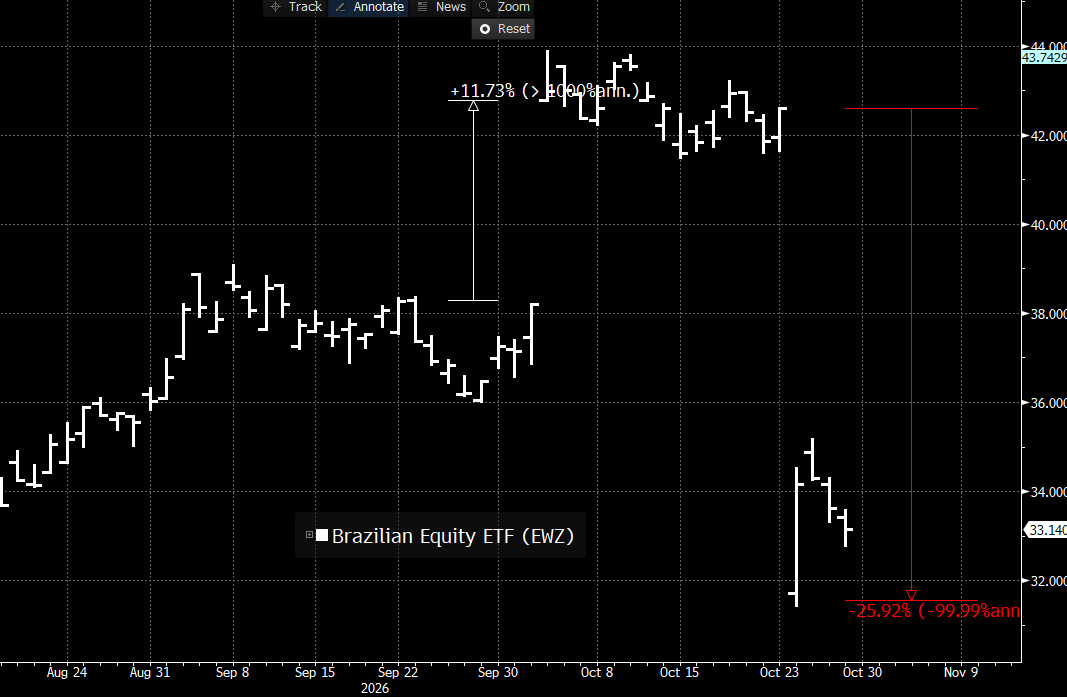
Elections are hard to call. There are a lot of quiet voters out there who don't answer polls. Prediction markets are better than they used to be, but they were around in 2016 too. The British vote on Brexit a few months before that was the same story. The market got it wrong, and the pound had the largest one-day drop I could find going back to the 1980s.
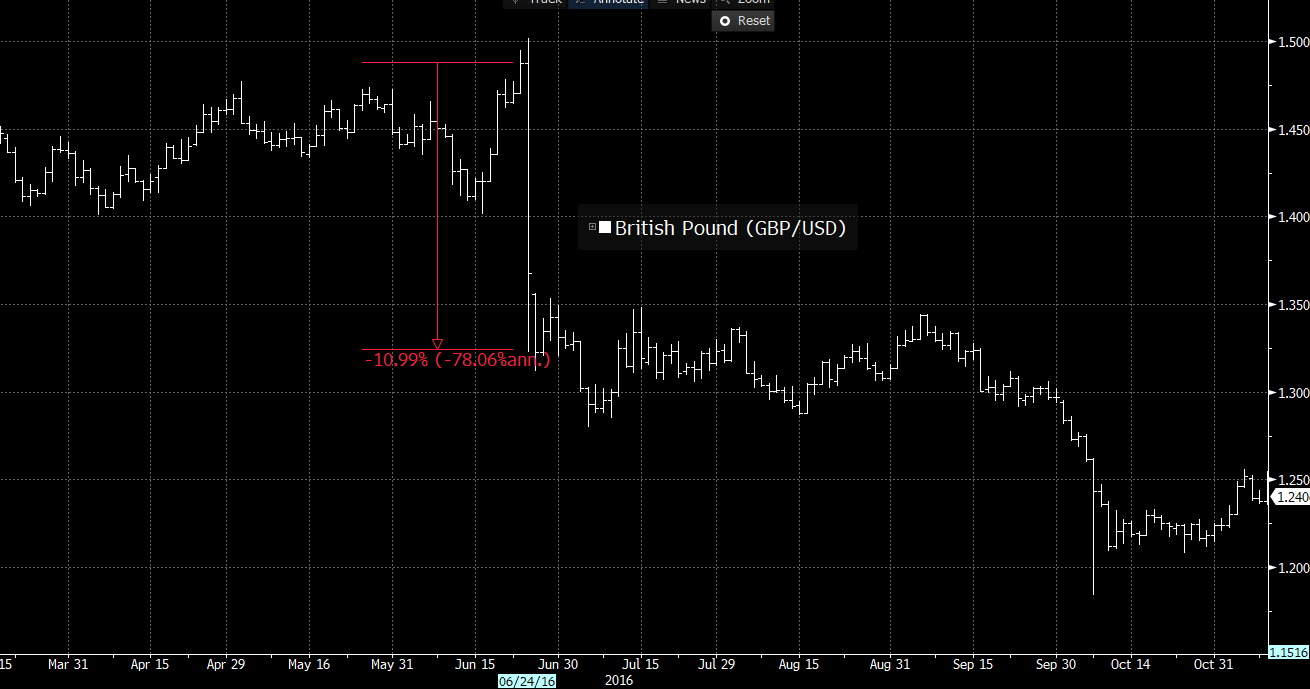
This happens a lot more than you'd think.
Outsource It to the Crowd
After years of trading these things, I've stopped spending time on my own forecast. There are armies of analysts doing the research. This is their specialty. I let them do the work, and then I figure out what the group thinks. It saves me a ton of time, and it gives me something most people don't have, which is no opinion. I'm unbiased about the outcome. My main focus is trying to see the positioning clearly.
Think of a poker player who reads the table instead of his own cards. That's the job. What does everyone have on? What happens to them if they're wrong?
I won't usually carry a position into an event like this unless I find a trade that doesn't hurt much if I'm wrong and pays big if I'm right. I'm not being contrarian just to be different. I'm selective. These trades show up when everyone has the same positions based on the same idea.
If the event goes their way, they already own it, and the move is a shrug. Wednesday's Fed meeting was exactly that. Everybody expected a hold, they held, and it was a dud. If the event goes against them though, look out below.
A one-sided market doesn't mean it’s wrong. But it does mean the payout is lopsided.
The Map
Here's how I do it for an event like this.
I build a map of what the big banks, the research shops and the think tanks are all saying, and then I look for the obvious common positions for all the scenario outcomes. It's the one time I'll happily watch CNBC, because it tells you what "everyone" thinks. Then I look for what can move the most if this idea is wrong.
I'm building that map now. The big obvious thing the market doesn't have is "what if Republicans hold both chambers."
It's priced under 10 percent. That's where the asymmetry lives, and that's one of the playbooks I'll bring to Midterm Money Live on Tuesday, while the votes are still coming in.
Enjoy the journey,
Tim