

Hi Traders,
Saturday afternoon I was down to the last window and the last few cuts on a trim project.
I marked 34 and a half inches for the top of the window, measured twice, and made one clean cut.
Then I looked over at my pile…
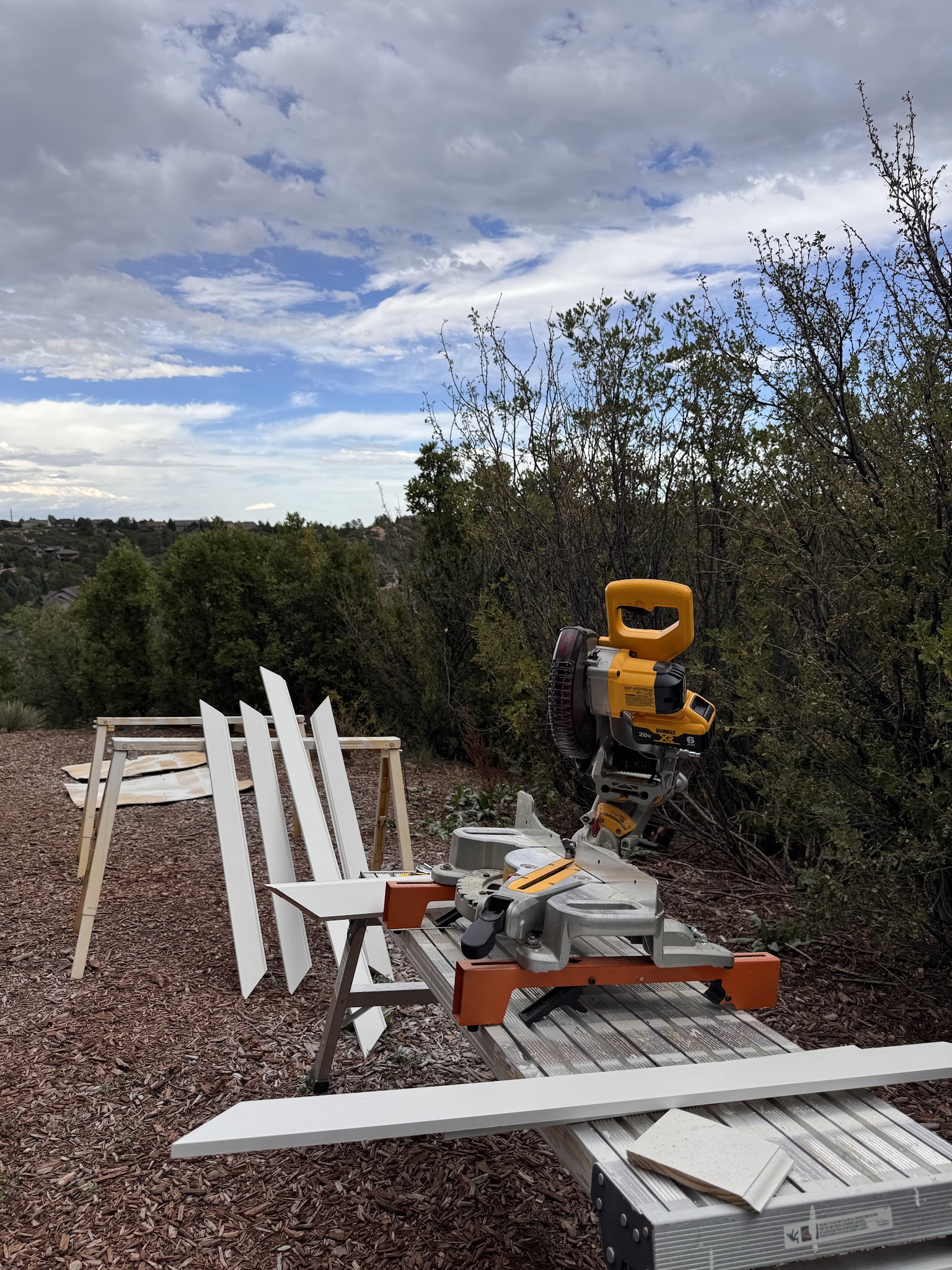
I'd already cut both short pieces. The one I still needed was 57 inches, and I had nothing left to cut it from.
I'd bought extra wood at the start, because that's what you do.
Every home project, they tell you to add 10%. I kinda hate buying the extra since it usually ends up sitting in my garage, but I do it every time.
Carpentry runs in my family, and I worked as a carpenter's assistant for a couple of years in college. Projects like this have been a hobby ever since.
It had been a while since I'd pulled the saw out, so I took my time early on. As the afternoon wore on I got tired and started rushing. I made a couple of bad cuts, and I didn't think much of it, because that's what the extra is for.
What I missed is that those bad cuts had eaten the extra. By the last window I was down to one board and didn't know it.
Bad cuts happen. What got me was spending my margin for error without keeping count. It cost me a 45-minute round trip to the lumber yard right when I wanted to be cleaning up.
I run my trading account the way I should have run that pile of trim.
I keep capital in reserve, and I don't care how solid the strategy looks, what the win rate is, or how strong the expectancy is (the average a strategy makes per trade across a long run of them). I keep dry powder, which is just cash I've decided to leave alone.
I've been doing this long enough to know that things happen outside my control, and "that's never happened before" still happens in 2026. When you're trading options and leverage, having ample capital decides whether a routine drawdown is an annoyance or the end of your account.
Right now, the market is running its saw the way I was running mine. As of mid-August, the equal-weight S&P 500 hadn't taken a pullback bigger than 2.25% since the March low. The VIX traded above 35 back in March and touched its low for the year last week.
Here's the kicker: In 2026, we haven't had a single session where declining stocks made up more than 80% of NYSE volume. A normal year gives you 21 of those. In three decades of data, the thinnest year had five.
None of that predicts a drop. It tells me nobody has needed their reserves in five months, which is precisely when people quietly stop keeping any.
The calendar is less forgiving.
Since 1990, every midterm election year except 2006 has handed the equal-weight S&P 500 a decline of at least 7 percent between mid-August and mid-October, with the average peak landing right around August 18.
I don't know whether this year cooperates, and I don't need to know. That's the whole point of a reserve. You set it aside before you can see what it's for.
Cash sitting in the account looks like a wasted opportunity. It's also what lets me put risk on in the first place and let a trade work without watching every tick.
One of the ways I do that is with the Macro Gauntlet that tells me what sectors are turning on and off.
Tap this link to find out more.
Enjoy the process,
Tim
Side note: when I got back from the lumber yard, a gorgeous young buck was hanging out right by my saw. Sometimes when you're having a rough go, take a minute, reset, and stay open to the beauty around you.